E-mail : inquiry@ronsteel.comPhone : +8615308477503

Stay updated with the latest company news, industry insights, and market trends in the metal material sector.

As the global energy sector pushes for higher thermal efficiency, reduced carbon emissions, and longer operating lifecycles, power generation systems are subjected to increasingly harsh environments. Components must continuously endure extreme temperatures, high mechanical fatigue, thermal shock, and aggressive chemical corrosion.
Among nickel-based superalloys, Inconel 625 (UNS N06625) stands out as a premier material for energy infrastructure. Renowned for its high mechanical strength, excellent fabricability, and exceptional resistance to oxidation and sulfidation, this alloy has become indispensable across traditional, renewable, and advanced power generation applications.
This article explores the specific applications, key metallurgical properties, and operational benefits of Inconel 625 in modern energy infrastructure.
Inconel 625 is a solid-solution strengthened nickel-chromium-molybdenum alloy fortified with niobium and tantalum. Unlike age-hardenable alloys that require specialized heat treatment, Inconel 625 achieves high tensile and fatigue strength directly through the lattice-straining effect of niobium and molybdenum within its nickel-chromium matrix.
Key metallurgical advantages include:
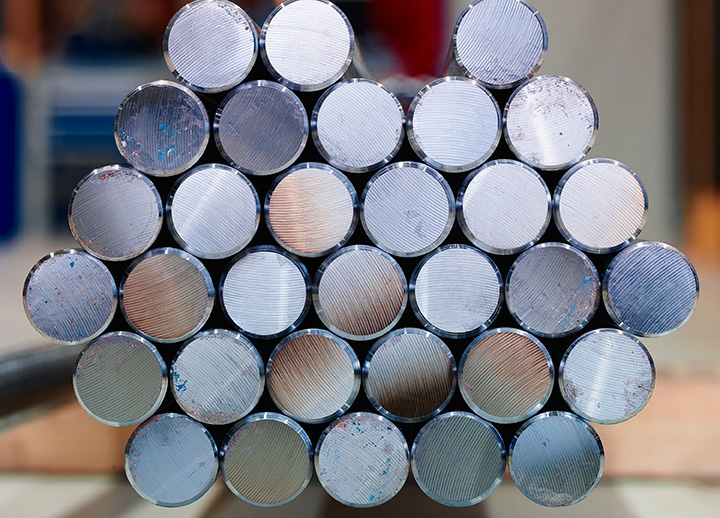
Inconel 625 is strategically deployed across various energy sectors where standard stainless steels fail due to thermal fatigue or hot gas corrosion:
| Energy Sector | Key Components | Primary Environmental Hazard | Role of Inconel 625 |
|---|---|---|---|
| Fossil Fuel & Biomass Power | Superheater/reheater tubes, boiler wall cladding, soot blower lances | High-temp coal ash corrosion, alkali chloride attack, sulfidation | Prevents tube wall thinning; dramatically extends boiler tube service life. |
| Gas Turbines (Combined Cycle) | Combustion liners, transition ducts, fuel nozzles, exhaust ducts | Extreme thermal shock, high-velocity hot gas erosion, thermal creep | Maintains structural geometry and resists thermal fatigue under continuous cycling. |
| Nuclear Power | Reactor core components, control rod mechanisms, steam generator internals | High-radiation stress corrosion, high-pressure water/steam corrosion | Ensures zero-leakage reliability and high structural integrity under radiation exposure. |
| Concentrated Solar Power (CSP) | Molten salt heat exchangers, central receiver tubes, thermal storage piping | Corrosive nitrate/carbonate molten salts at 560°C–700°C | Resists aggressive molten salt corrosion and high-temperature thermal cycling. |
| Waste-to-Energy (WtE) | Incinerator water-wall tubing, superheater protection overlays | Severe flue gas corrosion driven by high chlorine, dioxins, and fly ash | Provides a durable corrosion shield via weld overlay cladding. |
In waste-to-energy and biomass power plants, flue gases contain elevated levels of hydrogen chloride ($HCl$) and molten alkali salts that cause severe high-temperature corrosion on boiler tubes. Carbon steel superheaters can fail in months under these conditions.
Applying a 2mm to 3mm Inconel 625 weld overlay to boiler water walls creates an impermeable barrier against chlorine and sulfur attack, increasing boiler campaign life from months to years.
Modern combined-cycle gas turbine (CCGT) plants operate under frequent start-stop cycles to support grid fluctuations. Inconel 625 is widely specified for transition pieces, combustion cans, and expansion bellows because it resists low-cycle thermal fatigue and oxidation under extreme temperature swings.
Next-generation CSP plants use nitrate or carbonate molten salts at temperatures exceeding 600°C to store heat energy. Inconel 625 is one of the few commercial alloys capable of containing these aggressive liquid salt mixtures without suffering rapid degradation or wall thinning.
For plant operators and power engineering procurement managers, selecting Inconel 625 is a long-term investment in plant availability and safety. While the upfront cost of nickel superalloys exceeds that of standard stainless steel, eliminating unplanned outages and frequent boiler tube replacements yields a compelling total cost of ownership (TCO).
Whether used as solid seamless piping, forged valve components, or automated weld overlay cladding, Inconel 625 continues to power the future of high-temperature energy production.
Engineering Tip: For boiler tube cladding and repair work, specify low-iron ERNiCrMo-3 welding wire to ensure the dilution zone retains the full corrosion-resistant properties of pure Inconel 625.


