E-mail : inquiry@ronsteel.comPhone : +8615308477503

Stay updated with the latest company news, industry insights, and market trends in the metal material sector.

In modern engineering, selecting the right material is often the deciding factor between long-term operational success and catastrophic equipment failure. As industrial processes operate under increasingly severe conditions—higher temperatures, extreme pressures, and aggressively corrosive environments—standard carbon steels and stainless steels reach their physical limits. This is where nickel alloys prove their value as critical engineering materials.
From deepwater oil rigs and commercial aircraft engines to chemical reactors and clean energy plants, nickel-based superalloys provide the foundation for essential global infrastructure. But what makes nickel alloys so uniquely capable, and why are they considered indispensable across modern industry?
This article breaks down the core metallurgical reasons why nickel alloys are essential engineering materials and highlights the key advantages they deliver.
Nickel is inherently a versatile, ductile metal with high thermal stability and strong natural resistance to corrosion. However, when alloyed with elements such as Chromium (Cr), Molybdenum (Mo), Iron (Fe), Niobium (Nb), and Copper (Cu), its mechanical and chemical capabilities multiply exponentially.
The main structural advantages of nickel alloys include:
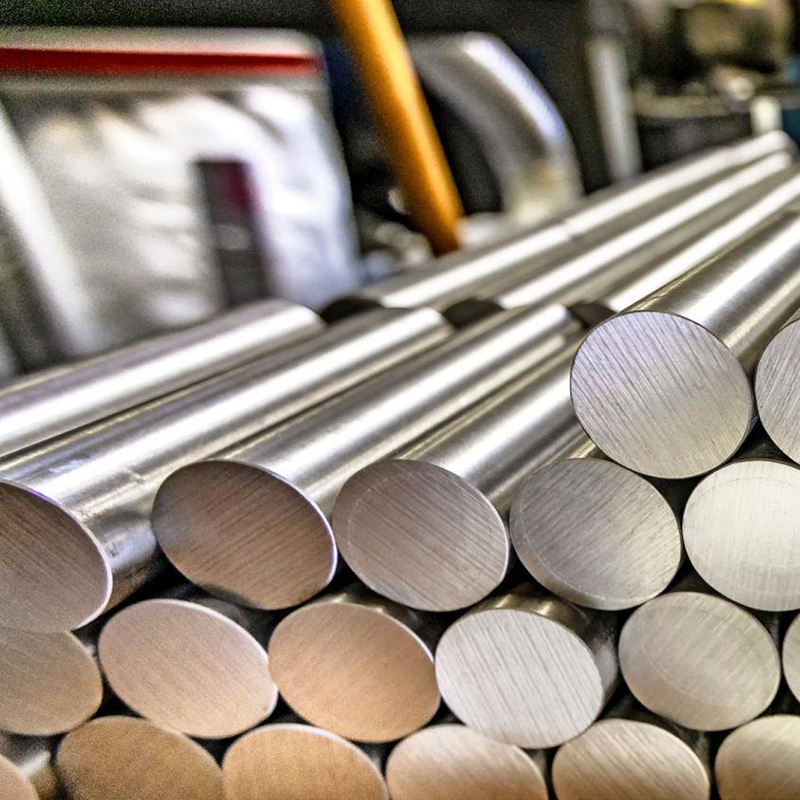
The strategic value of nickel alloys across industrial supply chains comes down to four major engineering advantages:
| Engineering Advantage | Primary Mechanism | Key Alloy Families | Industrial Impact |
|---|---|---|---|
| High-Temperature Creep Strength | Solid-solution and gamma-prime ($\gamma'$) precipitation hardening | Inconel (625, 718), Nimonic | Prevents mechanical deformation under thermal load in turbines & jet engines. |
| Severe Chemical Corrosion Defense | High Ni + Mo + Cr content resisting reducing & oxidizing acids | Hastelloy (C-276, C-22), Monel 400 | Eliminates pitting, crevice corrosion, and acid degradation in reactors. |
| Immunity to Stress Corrosion Cracking | High nickel base preventing chloride-induced cracking | Incoloy (800H, 825), Inconel 600 | Ensures long-term structural integrity in high-salinity & sour gas media. |
| Low Thermal Expansion & Ductility | Controlled thermal expansion coefficient & high toughness | Invar, Monel, Nickel 200 | Maintains dimensional precision in sensitive tooling & cryogenic tanks. |
When metals are exposed to high temperatures under continuous mechanical load, they undergo "creep"—a slow, permanent structural deformation. While iron-based steels soften rapidly above 500°C, nickel superalloys retain high yield strength and creep resistance at temperatures exceeding 1000°C. This property enables gas turbines and jet engines to operate safely at higher combustion temperatures, directly improving fuel efficiency.
Industrial processing equipment must withstand aggressive media like hydrochloric, sulfuric, and hydrofluoric acids, as well as wet chlorine and organic solvents. Nickel alloys resist both reducing environments (via elements like molybdenum) and oxidizing environments (via chromium), providing comprehensive chemical protection that extends equipment service life.
Austenitic stainless steels (such as 304 and 316) frequently fail in marine or hot brine environments due to Chloride Stress Corrosion Cracking (SCC). Nickel alloys with a nickel content exceeding 35% are practically immune to SCC, making them essential for subsea oil production, desalination plants, and chemical heat exchangers.
Because nickel alloys solve complex material challenges, they are specified for critical applications where failure is not an option:
Although nickel alloys carry a higher initial material procurement cost than standard metals, they provide an exceptional **Total Cost of Ownership (TCO)**. By preventing catastrophic failures, minimizing unscheduled maintenance shutdowns, and reducing component replacement frequency, nickel alloys remain essential materials for driving innovation, safety, and operational performance in modern industry.
Engineering Tip: When evaluating materials for high-stress installations, calculate lifetime operational savings and maintenance downtime costs alongside initial material price per kilogram to determine the true ROI of specifying nickel alloys.


