E-mail : inquiry@ronsteel.comPhone : +8615308477503

Stay updated with the latest company news, industry insights, and market trends in the metal material sector.

When modern engineering pushes the boundaries of heat and chemical aggression—whether inside a roaring jet engine, deep within a sour gas well, or inside a chemical reactor—standard iron-based metals quickly give up. They soften, crack, and dissolve.
Yet, nickel-based alloys thrive in these exact conditions.
To procurement managers and technical buyers, nickel alloys (like Inconel, Hastelloy, and Monel) are often seen as premium, high-cost materials. But understanding why they perform so exceptionally well reveals that they aren’t a luxury; they are a microscopic masterpiece of metallurgical engineering.
Here is the science behind why nickel alloys are virtually indestructible in the world’s harshest environments.
When standard steel crosses the 600°C threshold, its crystalline structure weakens, making it behave like soft plastic under pressure. Nickel alloys handle these temperatures with ease due to three specific metallurgical phenomena:
At an atomic level, nickel possesses a face-centered cubic (FCC) crystal structure. Unlike the body-centered cubic (BCC) structure found in standard carbon steels at room temperature, nickel’s FCC lattice remains stable from absolute zero all the way up to its melting point. This structural stability means the metal does not undergo phase transformations when heated, preventing thermal distortion and maintaining structural predictability.
Many high-performance nickel alloys (such as Inconel 718 or Inconel X-750) are doped with precisely controlled amounts of aluminum and titanium. When heat-treated, these elements form a secondary microscopic phase known as gamma prime ($\gamma'$) precipitates.
Think of these precipitates as microscopic speed bumps inside the metal.
When mechanical stress tries to deform the metal (a process known as creep), these atomic "speed bumps" block the movement of defects, allowing the alloy to hold massive mechanical loads at temperatures where stainless steel would deform and rip apart.
Because of the FCC matrix and gamma-prime locking mechanisms, nickel alloys exhibit industry-leading creep-rupture strength. They can withstand persistent, heavy mechanical stress over tens of thousands of hours without elongating or failing.
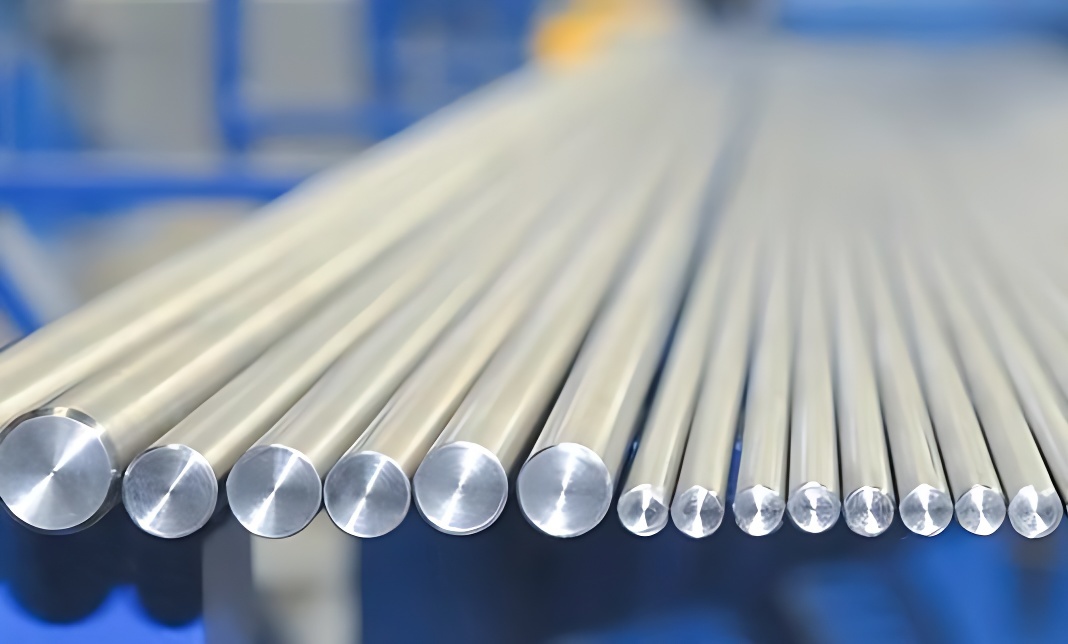
Heat is only half the battle; industrial environments are frequently filled with highly aggressive chemical atmospheres. Nickel alloys deploy a dual-layered defense mechanism to combat both dry and wet corrosion.
While the base matrix is nickel, these materials are heavily alloyed with Chromium (often 15% to 30%). When exposed to high-temperature oxygen, the chromium rapidly reacts to form a continuous, microscopic layer of chromium oxide ($Cr_2O_3$) on the surface.
This oxide layer acts as an impenetrable shield, blocking oxygen and corrosive gases from reaching the raw metal beneath.
If the surface is scratched or abraded, the chromium immediately reacts with the environment to self-heal the film, stopping localized attack before it starts.
In wet, acidic environments (like sulfuric, hydrochloric, or hydrofluoric acids), nickel alloys like Hastelloy C-276 utilize heavy additions of Molybdenum and Tungsten. These elements drastically increase the alloy's Pitting Resistance Equivalent Number (PREN), making them completely immune to pitting and crevice corrosion—the silent killers of standard stainless steel pipes.
One of the greatest engineering flaws of standard austenitic stainless steels (like 304 or 316) is their vulnerability to Stress Corrosion Cracking (SCC) in the presence of chlorides (such as seawater or industrial brine). Nickel is structurally immune to chloride SCC. By replacing iron with nickel as the base matrix, the risk of sudden, catastrophic brittle cracking in saltwater environments drops to virtually zero.
| Element | Primary Benefit | Target Environments |
| Nickel (Ni) | Provides the FCC matrix, high-temperature stability, and immunity to chloride SCC. | General extreme heat & marine settings |
| Chromium (Cr) | Forms the protective, self-healing oxide scale to resist high-temp oxidation. | Furnace components, oxidizing acids |
| Molybdenum (Mo) | Fights localized pitting and crevice corrosion in highly reducing acids. | Chemical processing, flue-gas desulfurization |
| Aluminum/Titanium | Creates the gamma-prime ($\gamma'$) phase for ultimate high-temperature strength. | Gas turbines, aerospace engineering |
The remarkable performance of nickel alloys comes down to a perfectly balanced chemistry that stops atomic deformation (creep) while simultaneously blocking chemical destruction (corrosion).
When evaluating lifecycle costs (LCC), deploying a nickel alloy eliminates frequent maintenance shutdowns, structural failures, and premature replacement costs. If your project combines high mechanical stress, temperatures above 600°C, or aggressive chemical exposures, nickel superalloys are the single most reliable insurance policy your engineering system can have.